
Spring Quality Inspection: What to Check Before Accepting a Shipment
A short incoming inspection catches most spring problems before they reach your production line. The checks focus on dimensions, load, finish, and consistency across the batch.
You do not need a full metrology lab. A few repeatable measurements catch the failures that matter.
Dimensional checks
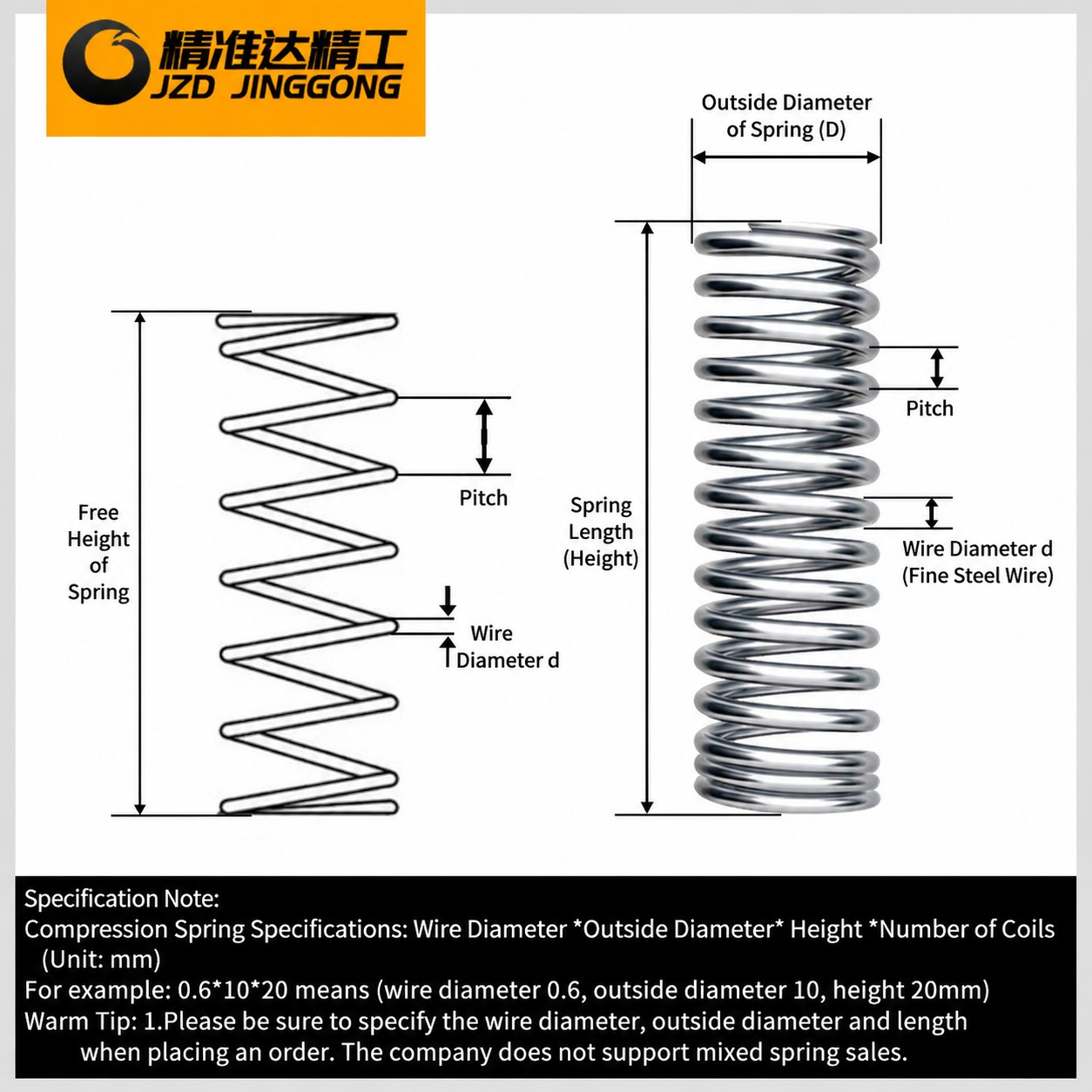
- Wire diameter with a micrometer.
- Outside diameter with calipers.
- Free length against the drawing tolerance.
- Coil count and end type.
Measure a sample from the batch, not a single part. Sampling catches variation that a one-off check misses.
Load and functional checks
If you have a spring tester, verify the load at the working height from your specification. Without a tester, do a repeat-cycle check: compress or extend the spring and confirm it returns to its original free length.
Load is the most important functional value, so it is worth checking even on a basic rig.
Finish and visual checks
- Even plating or coating with no bare spots.
- No cracks, burrs, or deep scratches.
- Consistent surface across the batch.
- Correct end type and leg geometry.
Visual inspection is fast and catches plating defects and handling damage that measurements miss.
What to document
| Check | Tool | Pass/fail basis |
|---|---|---|
| Wire diameter | Micrometer | Drawing tolerance |
| Free length | Calipers | Drawing tolerance |
| Load at height | Spring tester | Specification |
| Finish | Visual | No defects |
Keep a simple record per shipment. It helps you trace any issue back to the batch and resolve it with the supplier quickly.
FAQ
How many parts should I inspect?
A small sample from the batch is enough for a routine check. Use a sampling plan that matches your volume and risk level.
Do I need a spring tester?
A tester is ideal for verifying load. Without one, a repeat-cycle check confirms the spring returns to free length without permanent set.
What tolerance is normal for free length?
It depends on the spring size and specification. Confirm the agreed tolerance on your drawing and inspect against it.
What should I do if I find a defect?
Document it with photos and measurements, then contact the supplier with the batch information. Most issues are resolved quickly when the data is clear.
Can you provide inspection reports with the shipment?
Confirm with the supplier whether dimensional or material reports are available for your order.
What is the most common defect to watch for?
Dimensional drift and load variation are the most common. Checking wire diameter, free length, and load catches most of them.
Inspect a sample, not a single part
A short, repeatable incoming inspection protects your production line. Check dimensions, load, and finish on a sample of the batch, and document what you find.
Confirm the agreed inspection criteria and tolerances with your supplier before the shipment so expectations are clear.
Browse the Precision Springs catalog for related parts, or submit your specifications to request a quote.