
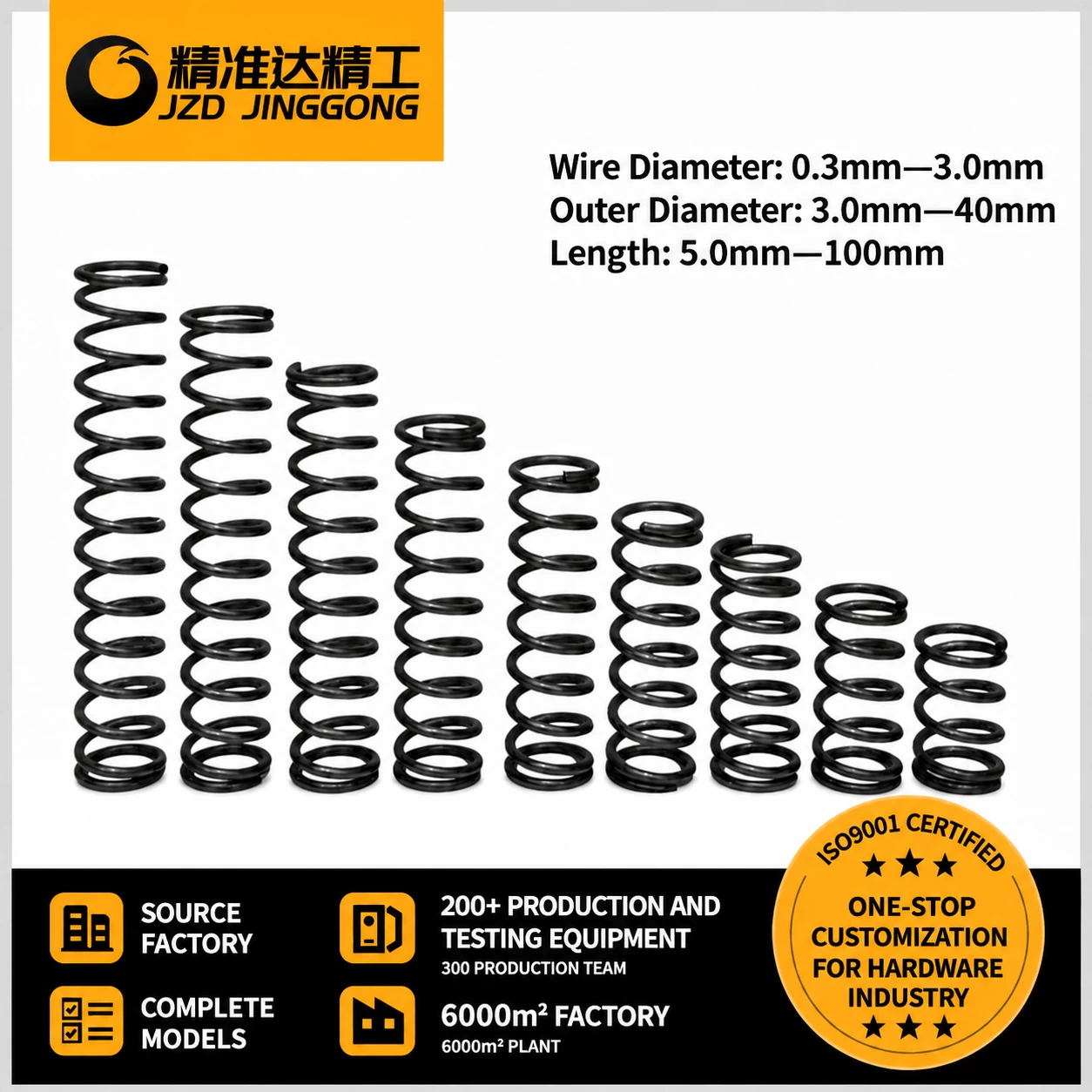
How to Choose a Compression Spring for Your Product
A compression spring stores energy when squeezed and pushes back to its original length when the load is released. The right spring matches your working load, travel distance, space, and environment—not just the cheapest option that fits.
Most selection errors come down to a few measurable specs. Nail these and the rest of the sourcing process gets simpler.
Start with load and deflection, not size
Springs are defined by two numbers first: the load they carry at a given compressed height, and how far they travel. Buyers often lead with free length, which is the last thing to lock down.
Write down your working load, the compressed height where that load must be met, and the maximum travel. These three values let a supplier calculate wire diameter, coil count, and free length.
Material depends on corrosion and temperature
| Material | Best for | Notes |
|---|---|---|
| Music wire / spring steel | High cycles, dry indoor use | Excellent fatigue life; needs a coating for corrosion resistance |
| Stainless steel (302/304) | Moisture, washdown, food contact | Moderate loads; resists rust without plating |
| Plated spring steel | Cost-sensitive outdoor parts | Zinc or nickel plating adds corrosion protection |
Spring steel handles more load per wire diameter. Stainless steel is the default when the part is exposed to moisture or chemicals and cannot be plated.
End types change how the spring seats
- Closed and ground ends stand flat and spread load evenly.
- Closed (unground) ends are cheaper but sit less evenly.
- Open ends suit light, non-critical applications.
Confirm the end type in your drawing so the spring seats correctly in the mating pocket or on the guide rod.
Common mistakes that delay sourcing
- Specifying free length without a working load.
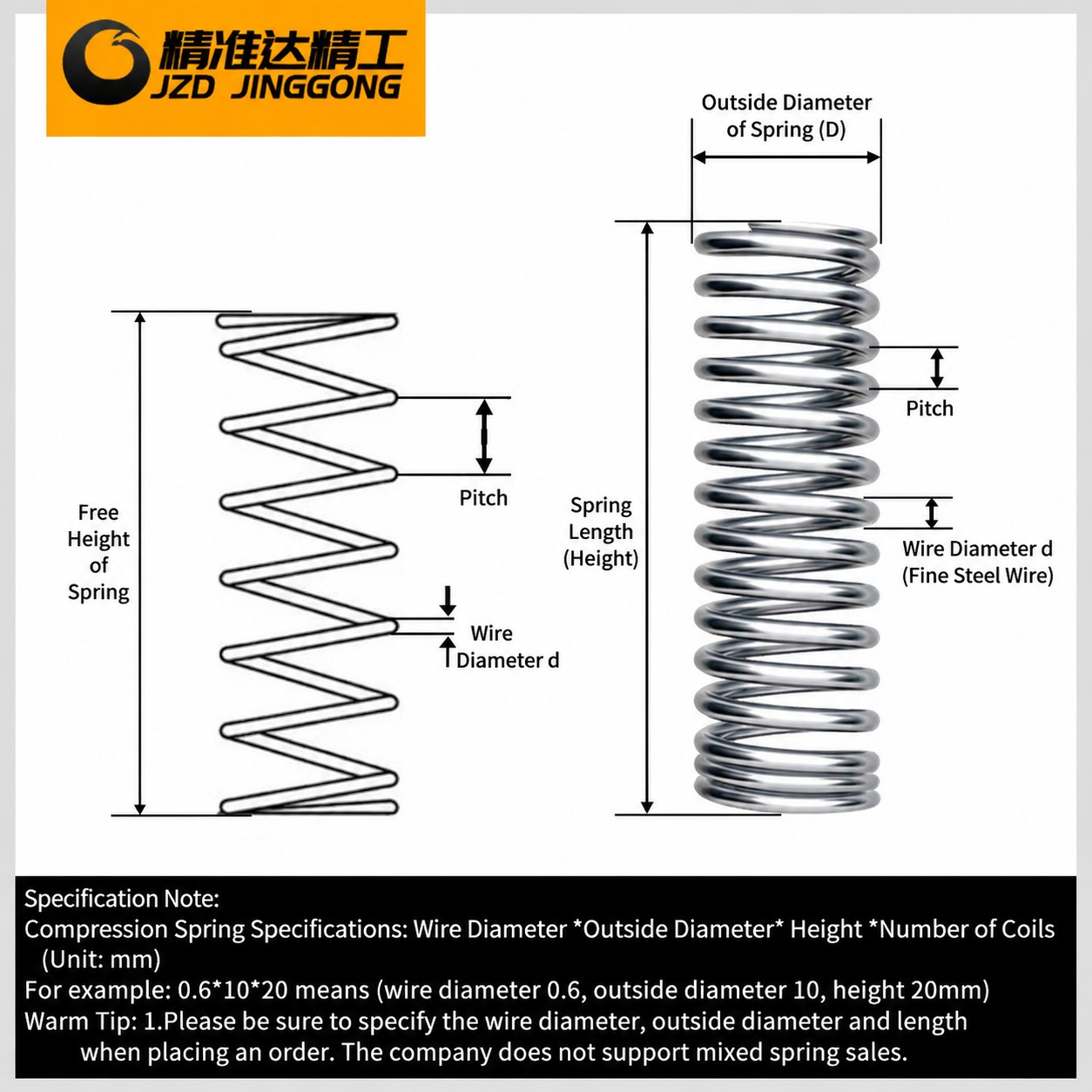
- Mixing up wire diameter and outside diameter.
- Ignoring solid height, which limits maximum compression.
- Choosing a material that cannot be made to your tolerances.
What to send your supplier
A complete RFQ for a compression spring includes wire diameter, outside diameter, free length, number of coils, end type, material, surface finish, working load and height, and annual quantity. A drawing or sample removes most of the guesswork.
FAQ
What information do I need to get a compression spring quote?
Wire diameter, outside diameter, free length, end type, material, finish, the working load and compressed height, and estimated annual quantity. A drawing or sample is ideal.
Can I order a small quantity first?
Yes. Prototype and small-batch runs are available. Confirm the minimum order and tooling approach with the supplier based on your final specification.
Stainless steel or plated spring steel—which should I pick?
Stainless steel if the part faces moisture, washdown, or food contact. Spring steel with plating if you need higher load in the same space and the environment is dry.
What is solid height and why does it matter?
Solid height is the length when all coils touch. It sets the maximum compression limit and protects the spring from damage during over-travel.
How do I keep costs down on a custom spring?
Use a standard wire diameter and outside diameter, keep tolerances reasonable, and order a practical quantity. Ask the supplier which adjustments reduce cost before finalizing.
Do you provide samples before production?
Prototype samples can be made from your drawing or reference sample. Confirm the sample lead time and any tooling cost with the supplier.
Move forward with a clear specification
A compression spring is straightforward to source once the load, travel, material, and end type are fixed. Send your drawing, target quantity, and delivery requirement, and the supplier can quote an exact match.
Request a quote with your part drawing, material preference, expected quantity, and destination. The team can advise on material selection and tolerances before you commit.
Browse the Precision Springs catalog for related parts, or submit your specifications to request a quote.