
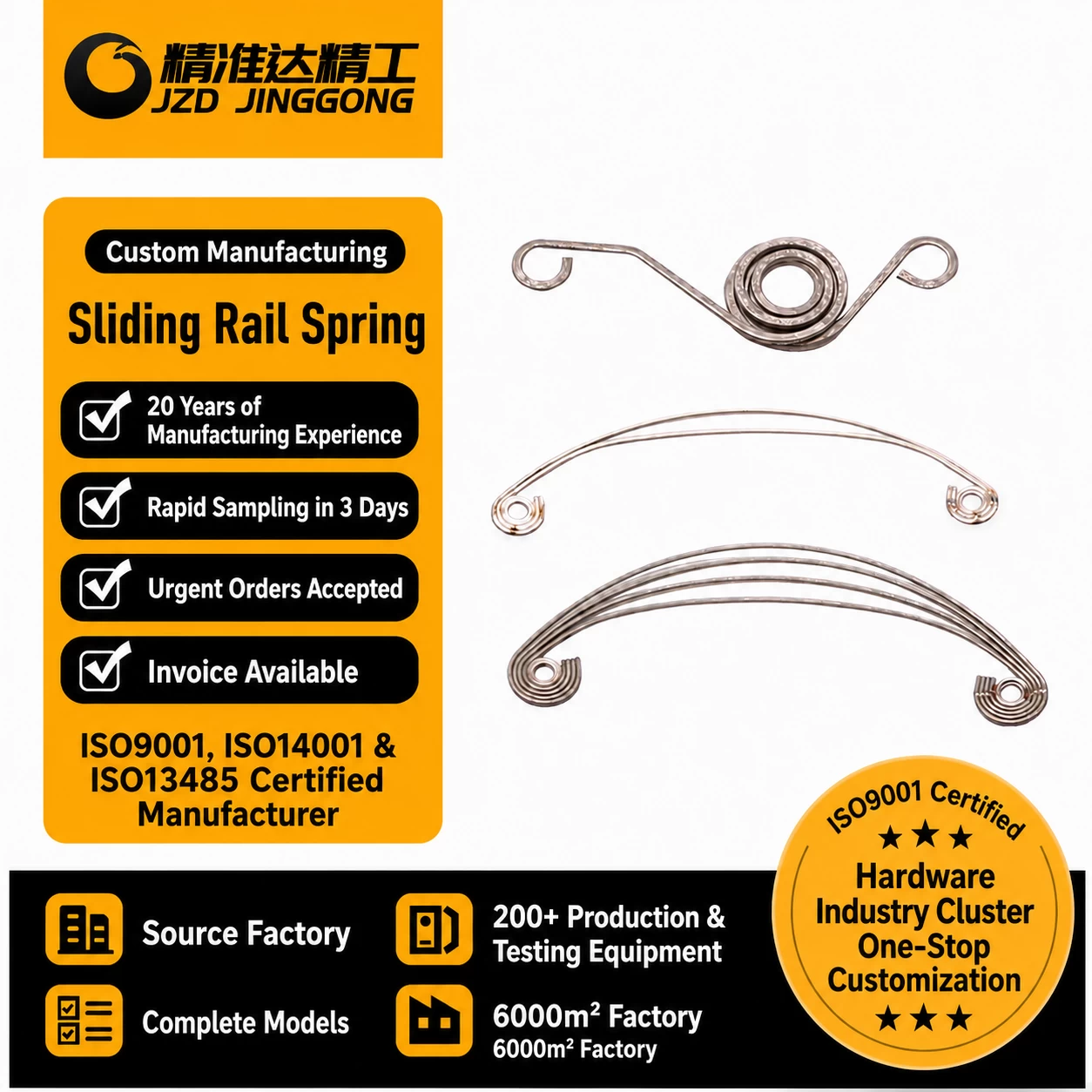
Torsion Springs for Consumer Electronics: Design and Sourcing
Torsion springs deliver rotational force in hinges, clips, and slide rails. In consumer electronics they appear in phone slide mechanisms, flip hinges, and retractable components where smooth, repeatable torque is critical.
Sourcing them well comes down to specifying torque, deflection angle, and leg geometry correctly.
How torsion springs work
A torsion spring stores energy by twisting around its coil axis. The legs push against fixed points, producing torque that returns a part to its resting position.
For slide rails, the spring provides the controlled return force. For hinges, it holds or returns a door or flap.
Key specifications
| Spec | What it defines |
|---|---|
| Torque | The rotational force at a given deflection angle |
| Deflection angle | How far the legs rotate |
| Leg length and shape | Mounting and force application |
| Winding direction | Clockwise or counter-clockwise coil |
| Wire diameter | Strength and spring rate |
Torque at a specific angle is the number that matters most. It ties the spring directly to the product's feel and function.

Material and finish for electronics
Music wire is common for its fatigue life. Nickel plating adds corrosion resistance and a clean appearance for visible or semi-visible parts.
For phone slide rails, the spring runs many cycles, so fatigue life and consistent torque are the priority.
What to send for a quote
- Required torque and deflection angle.
- Leg length, shape, and winding direction.
- Space available for the coil and legs.
- Material and finish.
- Expected cycle count.
A drawing or a sample from the mechanism is the fastest way to get an accurate quote.
FAQ
What is the most important torsion spring spec?
Torque at a given deflection angle. It defines the return force the product will feel.
Can you make torsion springs for phone slide rails?
Yes. Torsion springs for slide rail and consumer electronics mechanisms are available, including nickel-plated finishes.
What material is best for a high-cycle torsion spring?
Music wire offers excellent fatigue life. Nickel plating can be added for corrosion resistance. Confirm the recommendation for your cycle count.
How do I specify the winding direction?
State whether the coil winds clockwise or counter-clockwise, or provide a drawing or sample showing the leg orientation.
Can the legs be customized?
Yes. Leg length, bend angles, and end shapes are custom-formed to fit the mounting points.
Do you provide samples before production?
Yes. A prototype sample lets you verify torque and fit before committing to a production run.
Specify torque, not just size
Torsion springs are defined by their torque at a deflection angle. Send that value with the leg geometry and material, and the supplier can quote a spring that delivers the right feel.
Send your torque, deflection angle, and a drawing or sample to get a quote for a torsion spring.
Browse the Precision Springs catalog for related parts, or submit your specifications to request a quote.