

Closed-End vs Open-End Compression Springs: What to Choose
The end of a compression spring determines how it sits against the mating surface and how evenly it transfers load. The choice between closed and open ends is small but affects both performance and cost.
Closed and ground ends
Closed ends bring the last coil flat against the neighboring coil. Ground ends then machine that surface flat, so the spring stands square and spreads load evenly.
- Stands flat with minimal tilt.
- Even load distribution.
- Best for precision and higher-load applications.
Closed (unground) ends
Closed but unground ends sit flat enough for many uses while skipping the grinding step, which lowers cost. They are a good middle ground for mid-range applications.
Open ends
Open ends leave the final coils unwound and angled. They are the cheapest option but sit less evenly and are only suitable for light, non-critical loads.
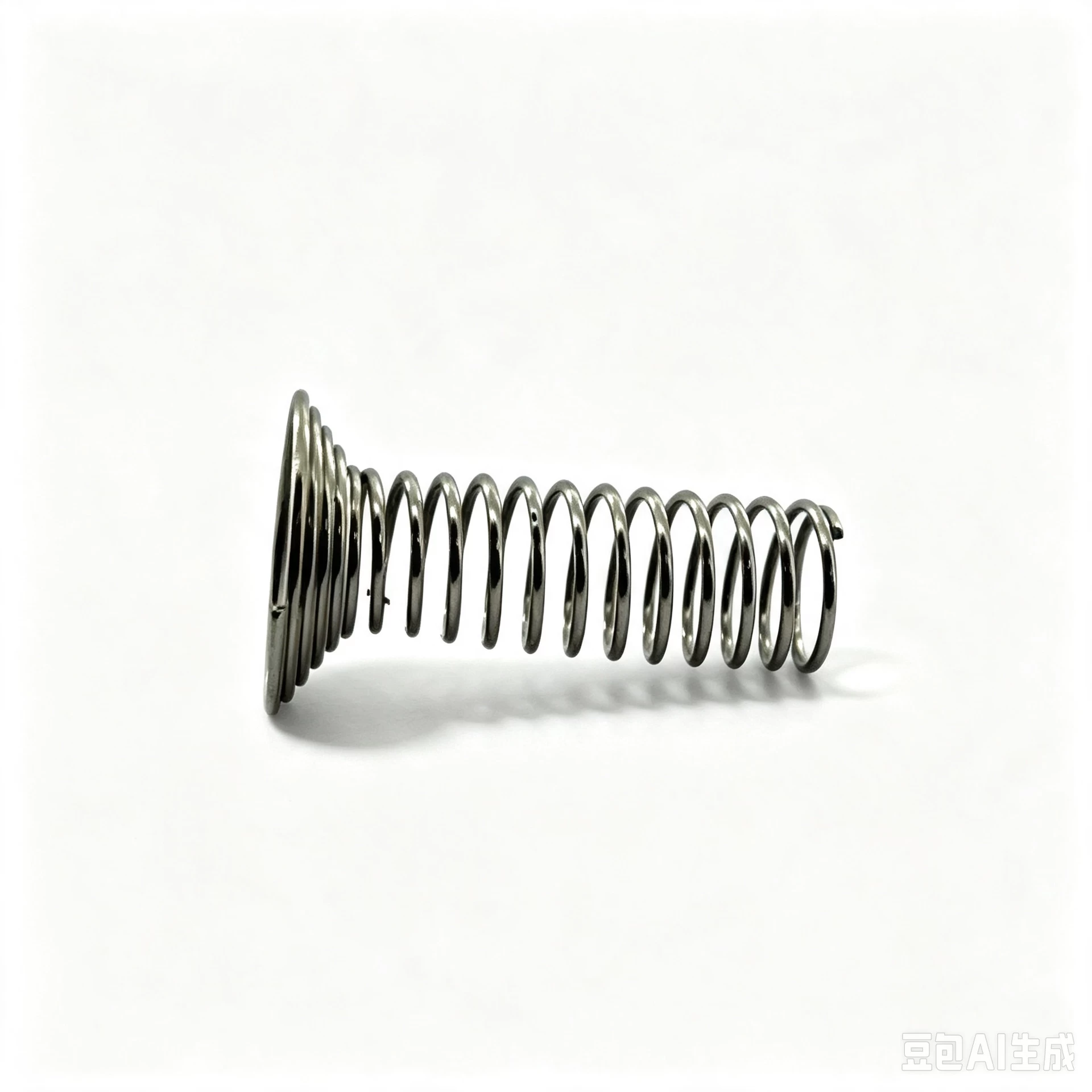
| End type | Seating | Cost | Best for |
|---|---|---|---|
| Closed & ground | Flat, even | Highest | Precision, high load |
| Closed (unground) | Mostly flat | Mid | General use |
| Open | Angled | Lowest | Light, non-critical |
How to decide
- Does the spring sit on a flat surface or a guide?
- Is even load distribution critical to the function?
- Is there budget pressure that favors a simpler end?
For anything load-critical or precision, choose closed and ground. For light-duty parts, open ends may be enough.
FAQ
What is the difference between closed and ground ends?
Closed ends flatten the final coil. Ground ends machine that surface flat so the spring stands square. Closed and ground is the most precise option.
Do open ends affect spring performance?
Open ends sit less evenly and transfer load less uniformly. They are fine for light, non-critical applications only.
Which end type is cheapest?
Open ends are the least expensive, followed by closed unground, then closed and ground.
Do I need ground ends for my application?
If the spring must stand flat and distribute load evenly, yes. Confirm with the supplier based on your load and mounting.
Can you make all three end types?
Yes. Compression springs can be produced with closed and ground, closed unground, or open ends.
How do I specify the end type?
State the end type on your drawing, or describe the mounting surface and the supplier can recommend the right option.
Pick the end type for the load, not just the cost
The end type is a small detail with a real effect on seating and load. Match it to the application, and confirm it in the drawing before production.
Tell us the mounting surface and load requirement to get a recommendation on the right end type for your spring.
Browse the Precision Springs catalog for related parts, or submit your specifications to request a quote.